A Low-Carb Thanksgiving Dinner That Tastes Like Thanksgiving
The whole dinner — turkey, stuffing, gravy, green bean casserole, cranberry sauce, sweet potato casserole, and two pies — rebuilt with a fraction of the carbs and none of the apology. Every recipe linked, every swap explained.
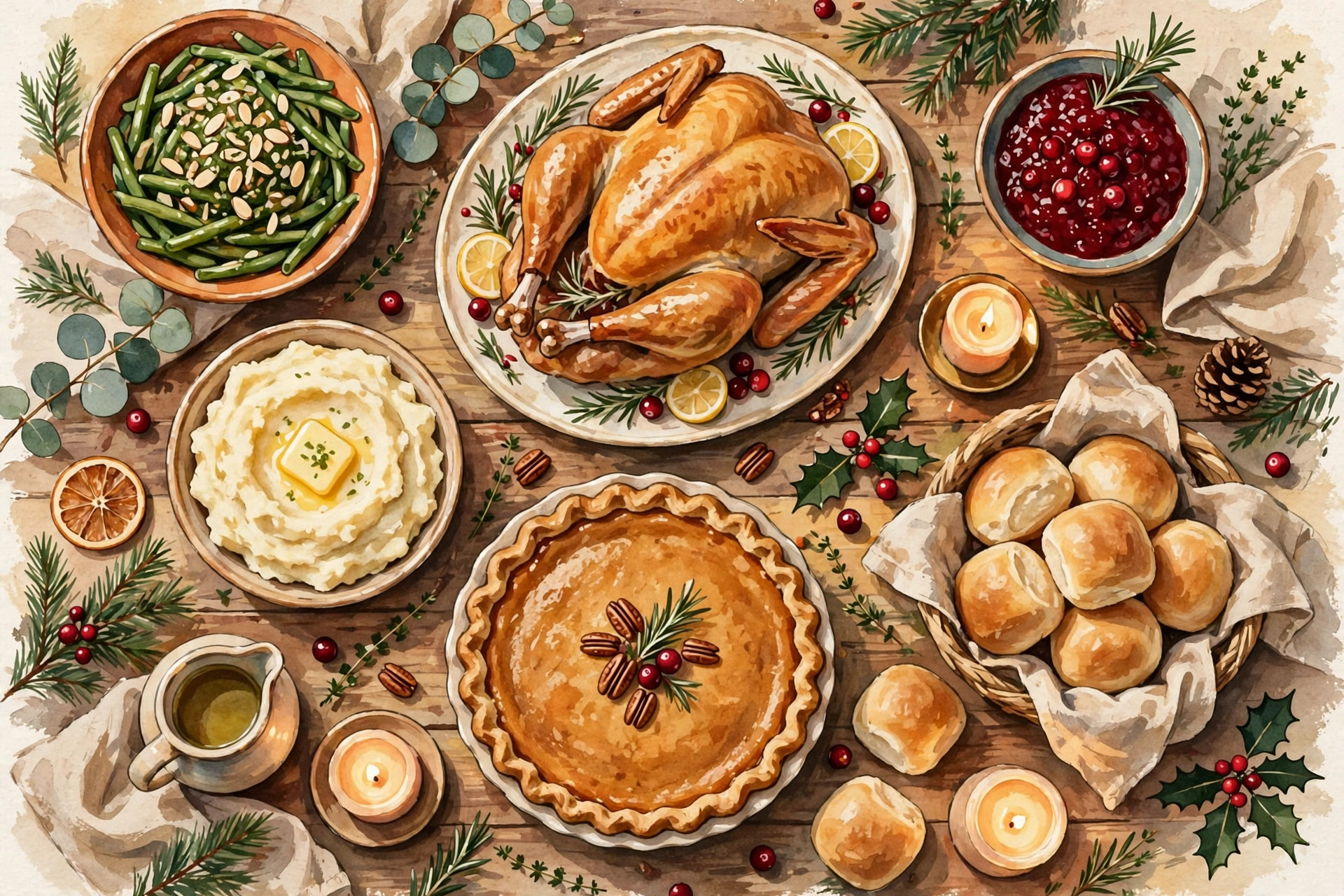
Thanksgiving is the one meal nobody should have to sit out. It’s also, not coincidentally, the most carb-loaded plate of the year — not because of the turkey, but because of everything standing around it.
Run the traditional plate honestly (these are estimates, the way labels and standard recipes add up): the stuffing is 25–30 grams, the mashed potatoes 30–35, the cranberry sauce carries about 24 grams of sugar in a quarter cup all by itself, the green bean casserole 10–15 under its fried-onion lid, the gravy a few — a slice of pumpkin pie lands at 40 or so, the pecan pie higher, and the sweet potato casserole is a dessert wearing a side dish’s name tag. You’re at 150–200 grams of carbs on one plate, and seconds haven’t happened yet.
Here’s the same dinner, rebuilt. Same table, same foods, same smells coming out of the kitchen — with the swaps made where they actually work, and left alone where they don’t.
The menu
Deviled Eggs — to start, while the turkey rests. No recipe rescue here at all: made the regular way, deviled eggs run about a gram of carbs apiece. They were on our side the whole time.
Herb-Butter Roast Turkey — the turkey was never the problem. Zero carbs, all technique: a dry brine, butter under the skin, and the discipline to let it rest.
Low-Carb Turkey Gravy — here’s the secret the jar companies don’t advertise: real roux gravy was never the carb problem. One tablespoon of flour thickens the whole pot — about a gram per serving. The drippings do the rest.
Low-Carb Stuffing — built on store-bought Schmidt 647 bread, dried and cubed. Everything else in stuffing — celery, onion, sage, butter, stock — was always free. It tastes like stuffing because it is stuffing.
Low-Carb Green Bean Casserole — the most-searched Thanksgiving side in America, and one of the easiest fixes on the table: the beans were never the carbs. The canned soup and the canned crispy onions were. This one makes its own mushroom cream sauce and crisps shallots instead.
Make-Ahead Mashed Potatoes — mostly potato, tasting like potato, at roughly half the effective carbs. The method is a stack: the right potato, an overnight chill that converts some of its starch into a form your body can’t fully digest (real science, honestly sized — it helps, it isn’t magic), one quiet blend partner squeezed properly dry, and a rich finish. Made on Wednesday, it also frees up Thursday.
Low-Carb Sweet Potato Casserole — the honest one. A sweet potato carries its carbs in itself; nobody can engineer that away, and this page won’t pretend otherwise. What comes off is the candied load on top of it — the brown-sugar glaze and the marshmallow blanket, 15–20 grams that were added, not grown — replaced with an allulose pecan crumble. What’s left is a sweet potato that tastes like one, at about half the traditional total.
Sugar-Free Cranberry Sauce — cranberries are one of the lowest-sugar fruits there are. The 24 grams in the canned sauce were added, not grown. Fifteen minutes, one bag of berries, allulose.
Low-Carb Pumpkin Pie — on our flaky low-carb pie crust, made with real butter and real flour, demoted. The filling is pumpkin, spice, and cream; it only ever needed the sugar and the crust dealt with. About 10 grams a slice against the usual 40.
Low-Carb Pecan Pie — the same crust, and a filling where an allulose syrup stands in for the corn syrup — the single biggest sugar bomb on the dessert table, gone. The pecans were never the problem either.
The plate math
Same dinner, two totals — both estimates, and every recipe page carries its own estimate worked from its ingredients: roughly 150–200 grams of carbs the traditional way, roughly 40–50 grams this way. Not zero. Thanksgiving isn’t a zero day, and this site has never been a zero-carb site. It’s the difference between a plate that puts you on the couch for three hours and a plate that lets you have the meal and the evening.
How these recipes got here
Straight with you, because this site does it no other way: every recipe on this menu is a formulation built on methods and ingredients that have already passed in this kitchen — the 647 bread, the allulose rules, the one-tablespoon roux, the cook-chill potato stack. They were published ahead of the holiday so they’d be here in time to be searched for, found, and cooked — and as each one gets its full cook at a real table, the verdict and the cook’s notes land on its page, good or bad. That’s the deal here: nothing on this site claims a test that didn’t happen, and a recipe that fails its cook gets fixed in public or taken down.
And what we didn’t do: we didn’t put cauliflower in a costume and call it three different foods. We didn’t build the table on almond flour — it makes everything taste like a substitute, and the point of this table is that nothing on it should.
That’s the whole philosophy, served family-style: real food, homemade taste, fewer carbs. Happy Thanksgiving.
Nutrition note: any carb figures mentioned are estimates derived from data published by the manufacturers of the ingredients used. Check your own ingredients for exact numbers.